The Çarşı and around
The old bazaar
10 min walk from the konak
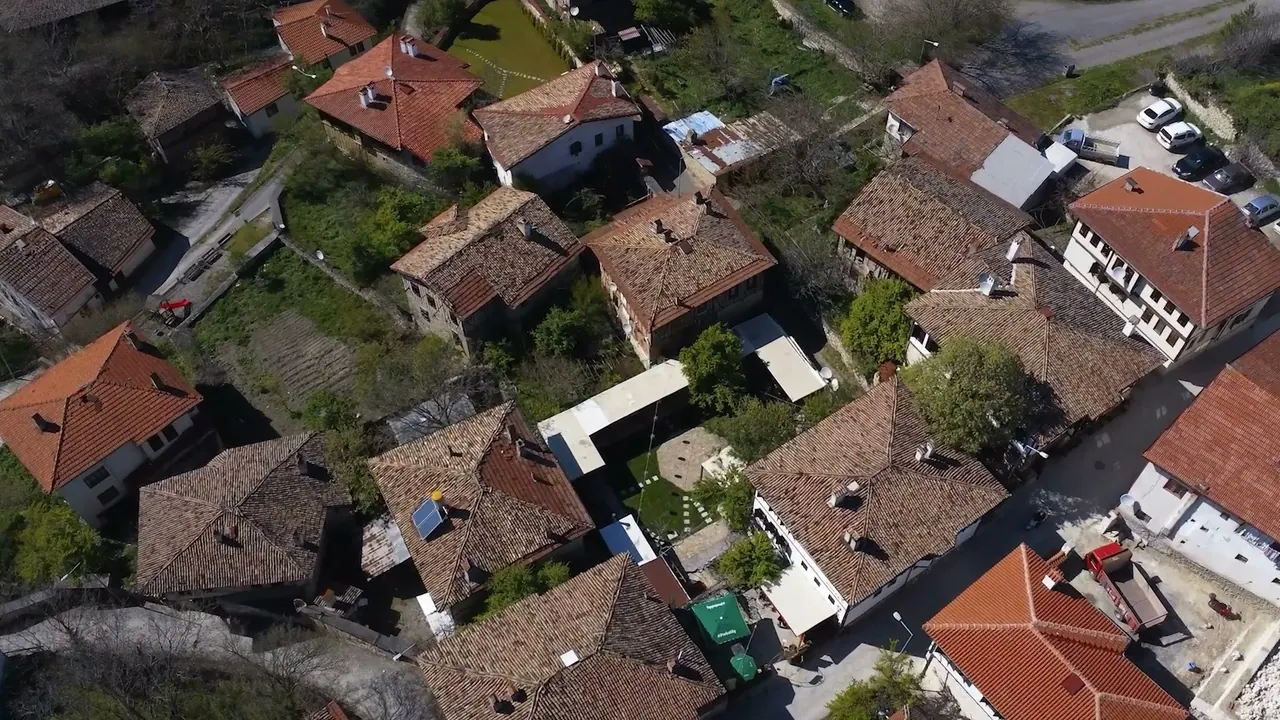
The konak stands in the Çarşı, once known simply as ‘the Town’ — Safranbolu's winter quarter. Even when families moved out to their summer houses in Bağlar, work and trade here never stopped. The streets are still cobbled, laid on a slope so that they stand up to floodwater and stay free of damp.
The lanes of shops at its heart still follow the old guild pattern: craftsmen of one trade worked side by side, and each market took its name from the craft. Today lokum makers, copper and leather workers, gift shops and coffee houses share the streets. Since the early 1990s, empty konaks have reopened as hotels and restaurants, and crafts that were close to vanishing have returned to the workbench.
The crowds tend to build in the afternoon; for quieter streets, go out early in the morning.
Köprülü Mehmet Paşa Mosque and the Yemeniciler Arastası
8 min walk from the konak
The Yemeniciler Arastası runs right alongside the Köprülü Mehmet Paşa Mosque. The mosque's charitable foundation built it in 1661, so that its shops would provide the mosque with an income.
An arasta is a market where the craftsmen of a single trade worked together — the old guild market. This one belonged to the makers of yemeni, handmade leather shoes, hence its name. Its wooden shops now sell crafts and souvenirs, and you can sit in its coffee house and watch the bazaar go by.
The mosque is named after Köprülü Mehmet Paşa, the 17th-century Ottoman grand vizier.
Demirciler Çarşısı and İzzet Mehmet Paşa Mosque
As the name says, Demirciler Çarşısı was the blacksmiths' market. Like the Arasta, it takes its name from the work done there, and you can still find smiths at their anvils.
Safranbolu's skill with iron shows at Cinci Han too: its gate, lock and key are counted among the fine examples of Turkish ironwork.
Close to the konak, the İzzet Mehmet Paşa Mosque is named after the Safranbolu-born grand vizier of Selim III's reign — the same İzzet Mehmet Paşa who gave the town its clock tower in 1797.
Hıdırlık Hill
Hıdırlık looks down over the Çarşı and is the easiest way to take in Safranbolu as a whole. From here you can see how the houses were set on the slope, each placed so as not to block its neighbour's view or sunlight.
Remembered as the place where the Turks first settled in Safranbolu, the hill has two open-air prayer platforms (namazgâh), once used for prayers for rain and for Hıdırellez, the spring festival. It also holds the tomb of Hasan Paşa, governor of Köstendil, dated 1845, the grave of Hızır Paşa, and the memorial tomb of Dr Ali Yaver Ataman, a hero of the War of Independence.
Two paths lead up the hill. The view is at its best late in the afternoon, as the sun goes down.
Historic buildings
The Safranbolu houses
Safranbolu is, first of all, its houses. Some 2,000 traditional houses survive here, built in the 18th and 19th centuries and the early 20th, and hundreds of them are protected by law. They cluster in two districts: the Çarşı, where families spent the winter, and Bağlar (‘the vineyards’), where they moved for the summer. All were built on valley slopes unsuited to farming, each placed so as not to steal its neighbour's view or sunlight.
Most have three storeys and six to eight rooms: stone below, adobe and timber above, under a roof of traditional clay tiles. You enter through the hayat, the entrance hall — called the taşlık when it is paved with stone. Upper floors jut out over the street, and the tall, narrow windows are screened with wooden lattices called muşabak.
Inside, each room was designed as a self-contained home for one family, with built-in cupboards (yüklük), shelves, a hearth and low divans. Some cupboards hide a small bathing cubicle, the gusülhane, and the ceilings are of carved wood. A few houses even have an indoor pool, built to cool the air and to keep water at hand in case of fire.
Cinci Han and Hamam
12 min walk from the konak
Cinci Han was built in the 1640s by Karabaşzade Hüseyin Efendi, known as Cinci Hoca, who had become chief judge of Anatolia (kazasker) after Sultan İbrahim came to the throne in 1640. Built of cut and rubble stone, the two-storey han has more than sixty rooms and once lodged travellers on the caravan road.
Its gate, lock and key are counted among the fine examples of Turkish ironwork. Restored, the han takes in guests once again, now as a hotel and restaurant.
Cinci Hoca also built the Cinci Hamam, in 1645, on Kazdağlıoğlu Square in the heart of the bazaar. The domed bath has separate sections for men and women, with its cool room (soğukluk), hot room (sıcaklık) and furnace (külhan) still in place — and it still works as a hamam.
City History Museum and Clock Tower
5 min walk from the konak
The yellow building looking down on the town was built in 1904 as the Government House, on the hill known as the Kale — ‘the castle’. Raised in cut stone at the initiative of Enis Paşa, governor of Kastamonu, and the district governor of the day, Ahmet Bey, it burned down completely on 19 January 1976. Restored by the Ministry of Culture and Tourism, it reopened in 2006 as a cultural centre and the City History Museum.
The clock tower on the same hill is older: it was built in 1797, in the reign of Selim III, by the Safranbolu-born grand vizier İzzet Mehmet Paşa. It is counted among the oldest clock towers in Anatolia, and its clock is said to have been brought from London.
The old prison on the hill was built by Abdülhamid II in 1906; it was in use until the mid-1990s and was restored in 2005.
Kaymakamlar Evi
Climb the narrow lane towards Hıdırlık and you reach the Kaymakamlar Evi, a good place to see a Safranbolu house from the inside. It is thought to have been built in the early 18th century by Hacı Mehmet Efendi, commander of the Safranbolu garrison. His rank, kaim-makam — roughly a lieutenant colonel — gave the house its name.
Expropriated by the Ministry of Culture in 1979 and restored, it is now a museum house run by the district governorate. In the harem and selamlık — the family and the men's reception quarters — and in the central hall (sofa), furniture and costumed figures bring old Safranbolu life back to the rooms. You enter each room from behind a wooden screen, a courtesy of the old days, and the bathing cubicles built into the cupboards are distant ancestors of the en-suite.
A little further
İncekaya Aqueduct and Glass Terrace
About 7.5 km from the konak
The İncekaya Aqueduct spans Tokatlı Canyon. Its origins are thought to go back to Byzantine times, and it owes its present form to a restoration at the end of the 18th century by İzzet Mehmet Paşa, the grand vizier who also built the clock tower.
A glass viewing terrace at the canyon's edge lets you look straight down to the canyon floor. The canyon is also a good choice for an easy walk in nature.
Bulak Mencilis Cave
About 8 km from the konak
North-west of Safranbolu, where the village of Bulak, which belongs to Karabük, meets the Safranbolu boundary, lies a cave formed millions of years ago. Bulak (Mencilis) Cave runs for more than 6 km, but only the first 400 metres are open to visitors.
It has two mouths: one where the water flows out, and an older, dry opening reached by steps on the left of the hill behind it.
Yörük Village
About 11 km from the konak
Named after the Yörük nomads who settled here, the village is a good place to see Safranbolu's architecture on a rural scale. With its stone and timber houses, barns and bay-windowed buildings, it still keeps the fabric of a traditional village.
Give yourself a few unhurried hours to wander its lanes.
Tastes of Safranbolu
Saffron
Saffron, which gave the town its name, is known as the world's most expensive spice. Only the red stigmas at the heart of each flower are used, and because they are picked by hand, it takes some 80,000 flowers to make half a kilo. No wonder it is compared to gold.
The purple flowers open in October and November, and at harvest time the saffron fields around the town draw plenty of visitors. Saffron goes into food, medicines and cosmetics; here you will meet it in zerde, a saffron rice pudding, and in saffron lokum in the bazaar.
Safranbolu lokum
Safranbolu lokum — Turkish delight — is known for being lighter and less sweet than the usual kind. Local makers put the difference down to the hard, mineral-rich local water and the natural sugar they use.
There are plenty of kinds: double-roasted, hazelnut and coconut, rose, mastic and — fittingly for the town — saffron with pistachio. It is made fresh every day, and it is one of the most popular things to take home.
Local cooking and çavuş grapes
Safranbolu has dishes of its own: bükme, perohi, bütün et, okra with meat and sour unripe grapes (koruklu etli bamya), two local bean dishes (uzun and dilme fasulye), keşkek — wheat slow-cooked with meat — and saffron zerde. Alongside them come classics of Turkish home cooking: su böreği, the layered pastry; cimcük, the local pasta; yayım, home-made noodles; haluşka; höşmerim, a cheese-based sweet; walnut çörek, baklava and kadayıf — all washed down with kiren, a cornelian cherry drink.
Another local speciality is the çavuş grape. Grown in the village of Yazıköy, mostly as a table grape, it is picked in September, and the harvest is celebrated with vintage festivities.
The names of a town
The town has changed its name several times. Known as Dadybra in Byzantine times, it became Zalifre under the Seljuks in 1196. In the age of the Anatolian beyliks and the early Ottoman period it was Borglu or Borlu, and Ottoman land and tax registers record it as Taraklıborlu, after the Taraklı tribe who settled in the area. From the mid-18th century it appears as Zağfiran-ı Borlu and, from the last quarter of the 19th, as Zağfiranbolu — zağfiran being the old word for saffron — which in time became Zafranbolu and, finally, Safranbolu.